



Fast Dispatch from Newry: No customs charges or import fees to ROI & UK
- Brand: Trixie
- Sku: TX32092
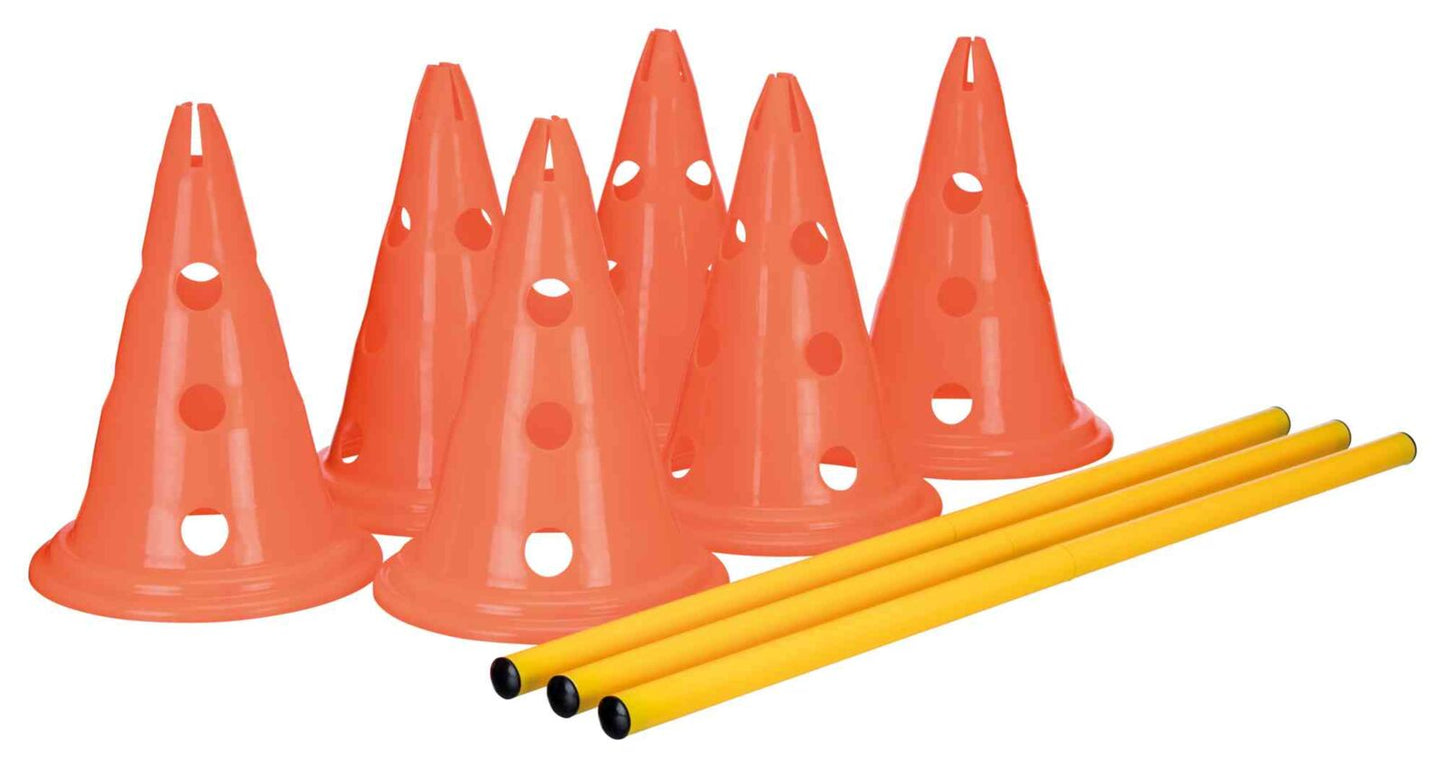
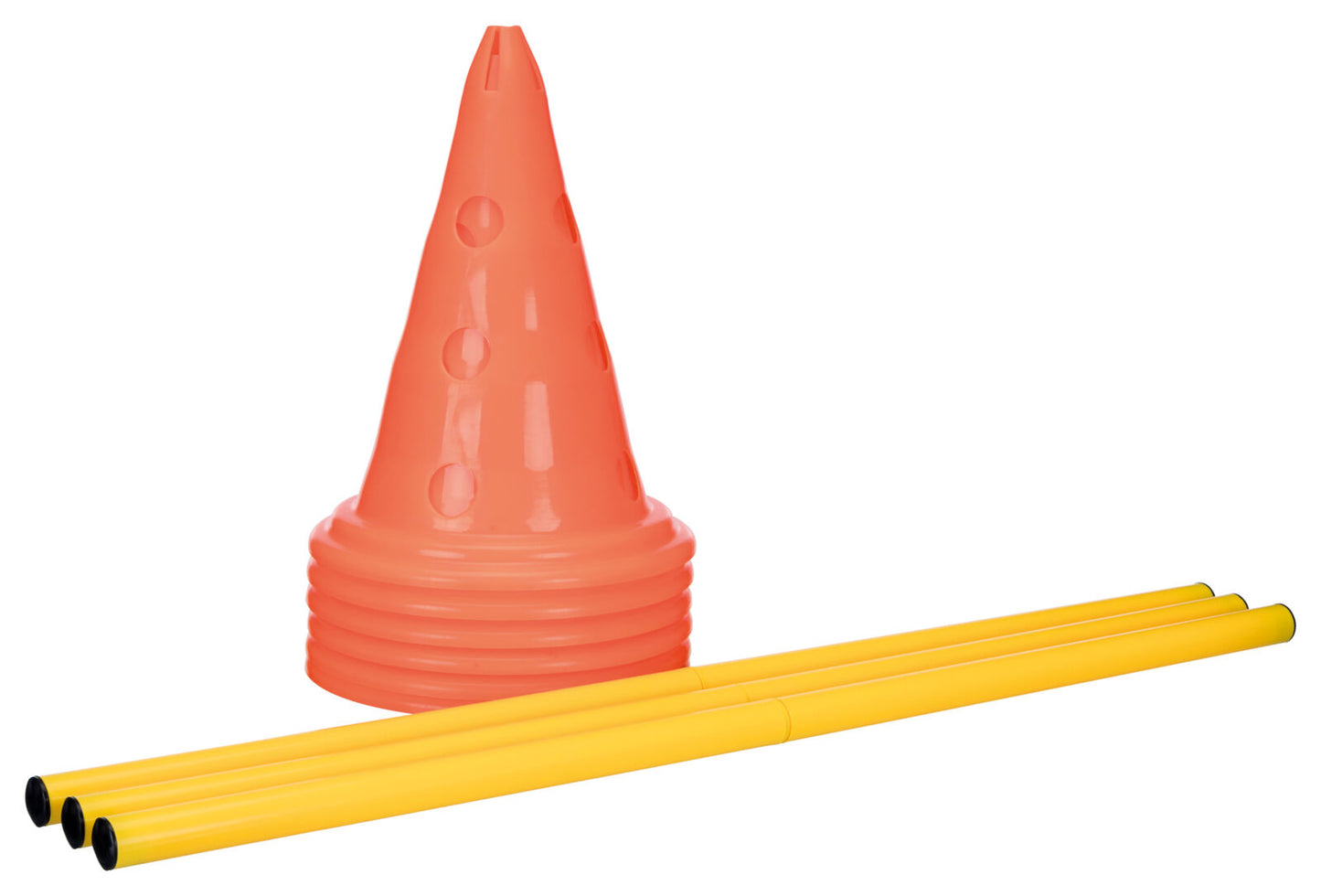
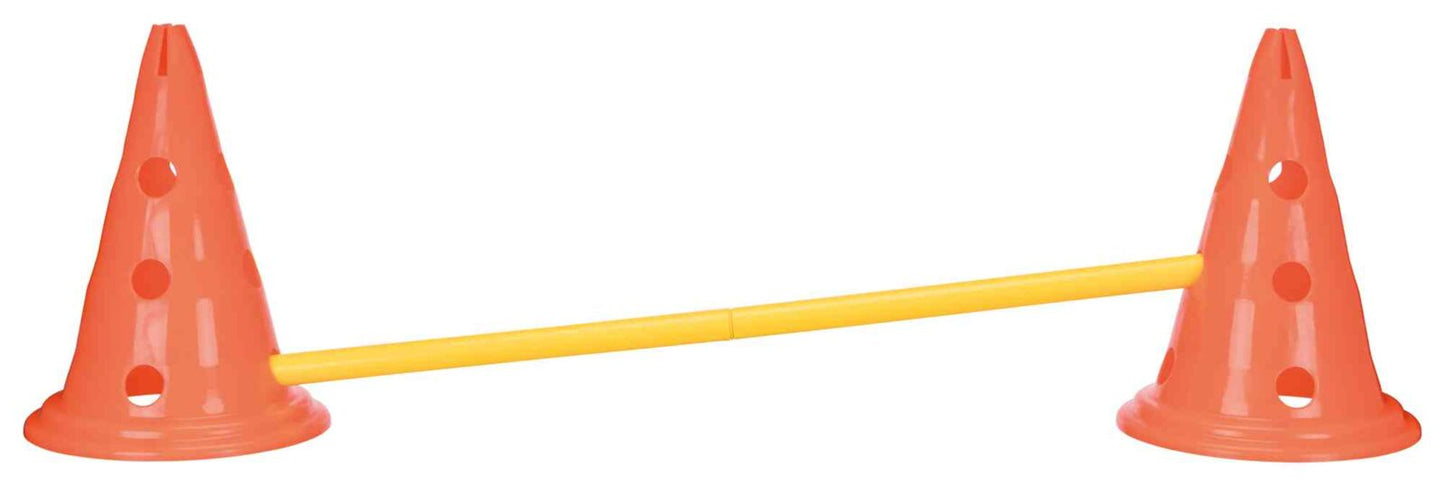
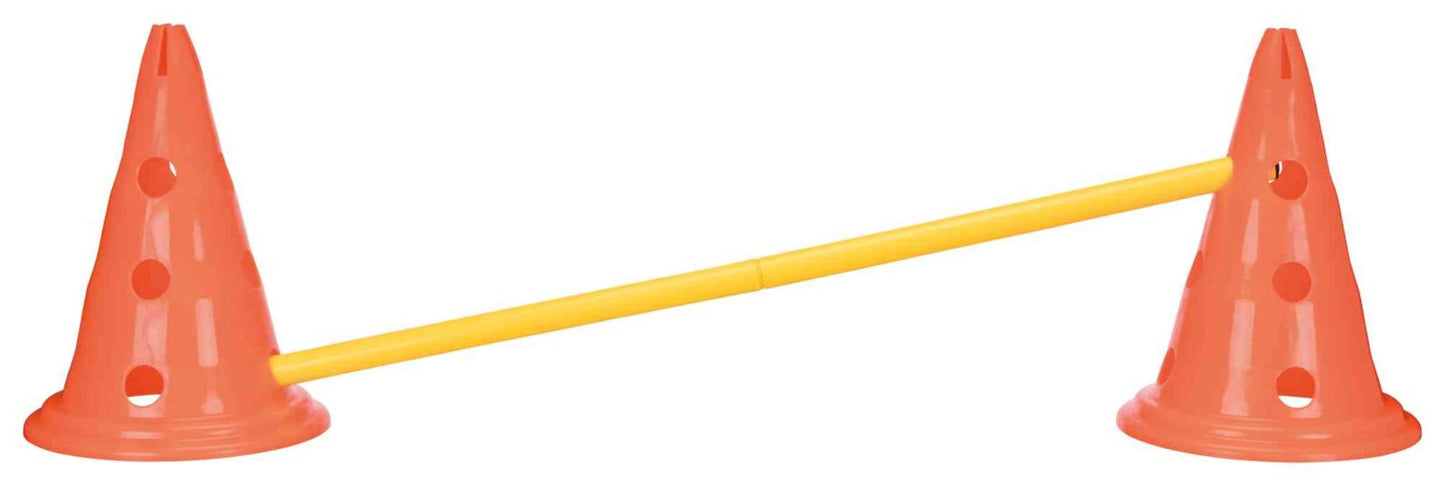
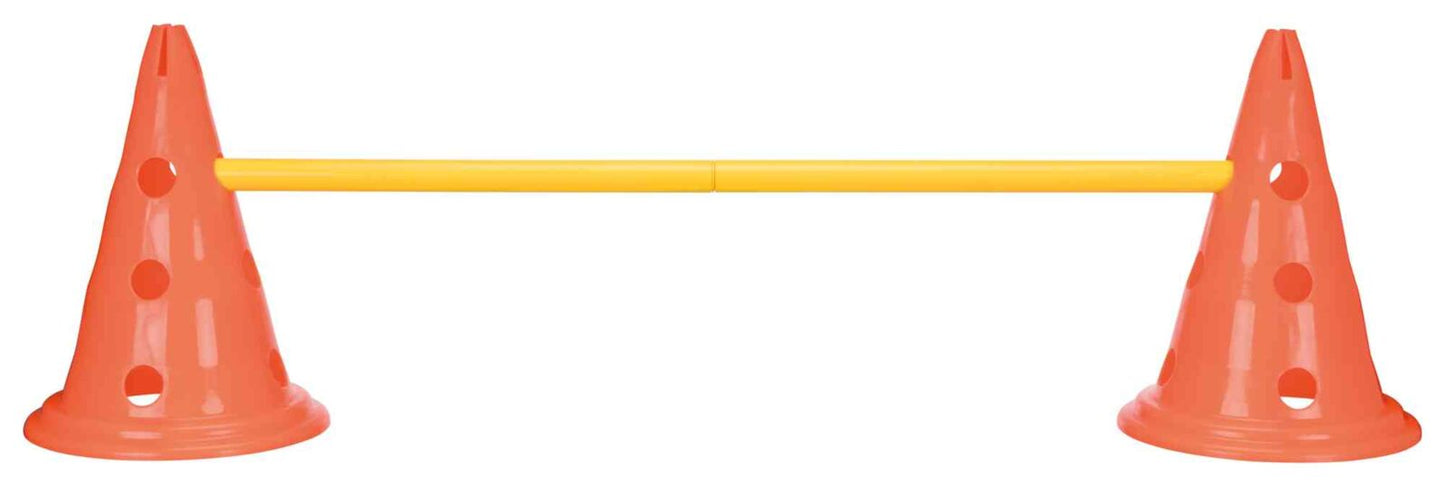
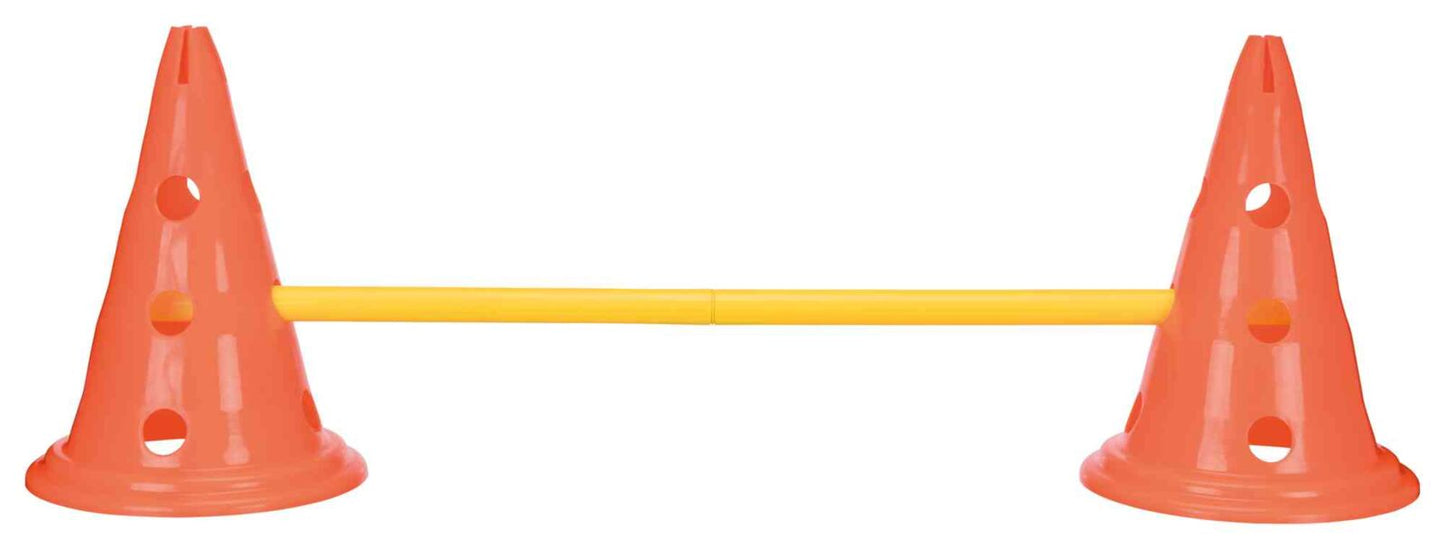
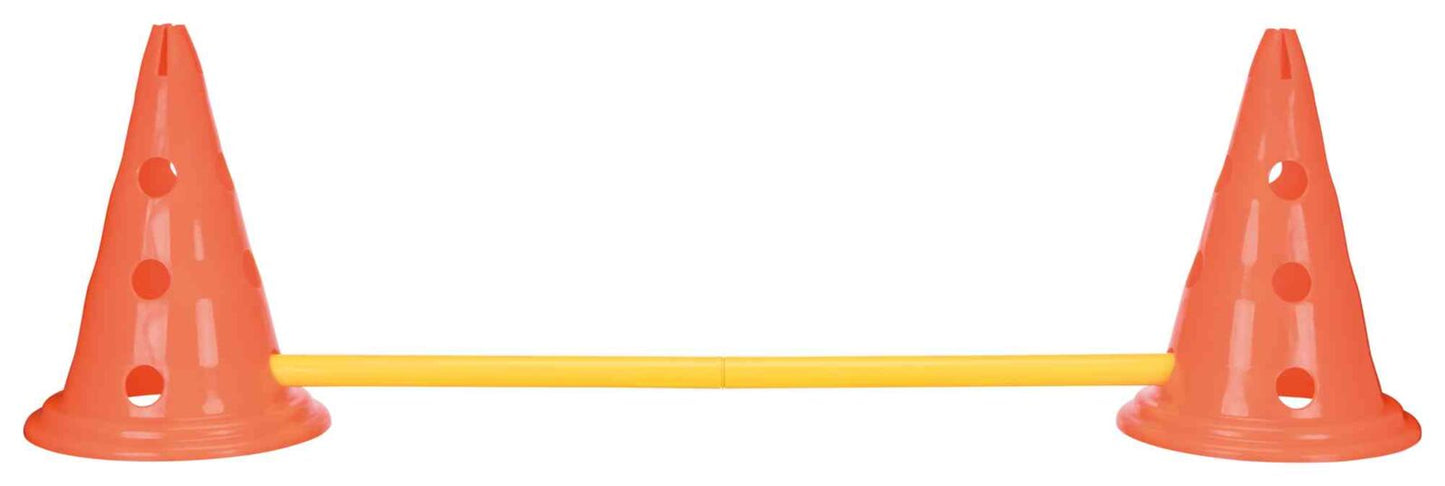
Trixie | Dog Sports Fitness, Training & Canine Conditioning Cavaletti Set | Pylon Agility Jump Obstacles with Cones & Poles
Trixie Pylon Obstacle Set: Enhance Your Dog's Agility, Fitness & Coordination!
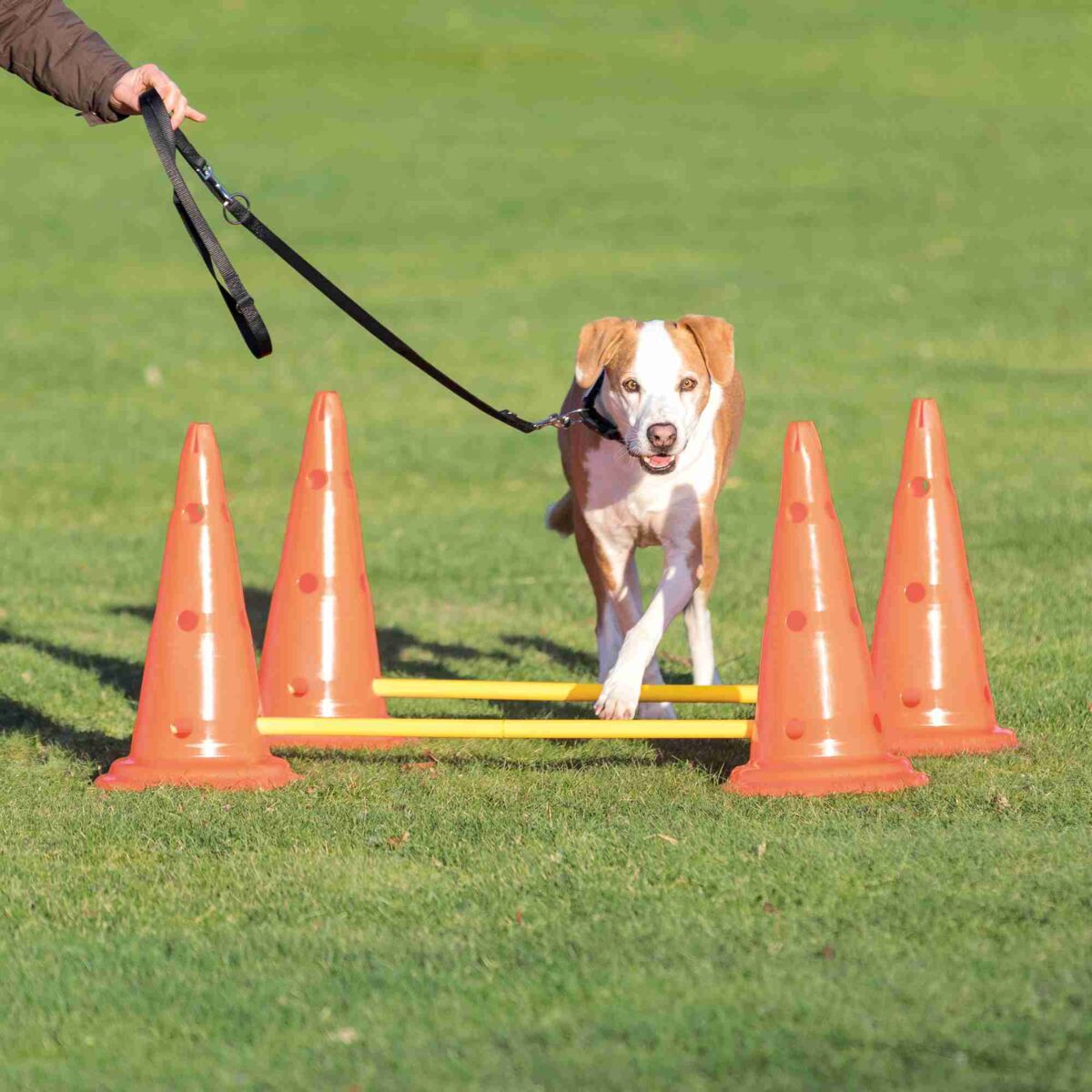
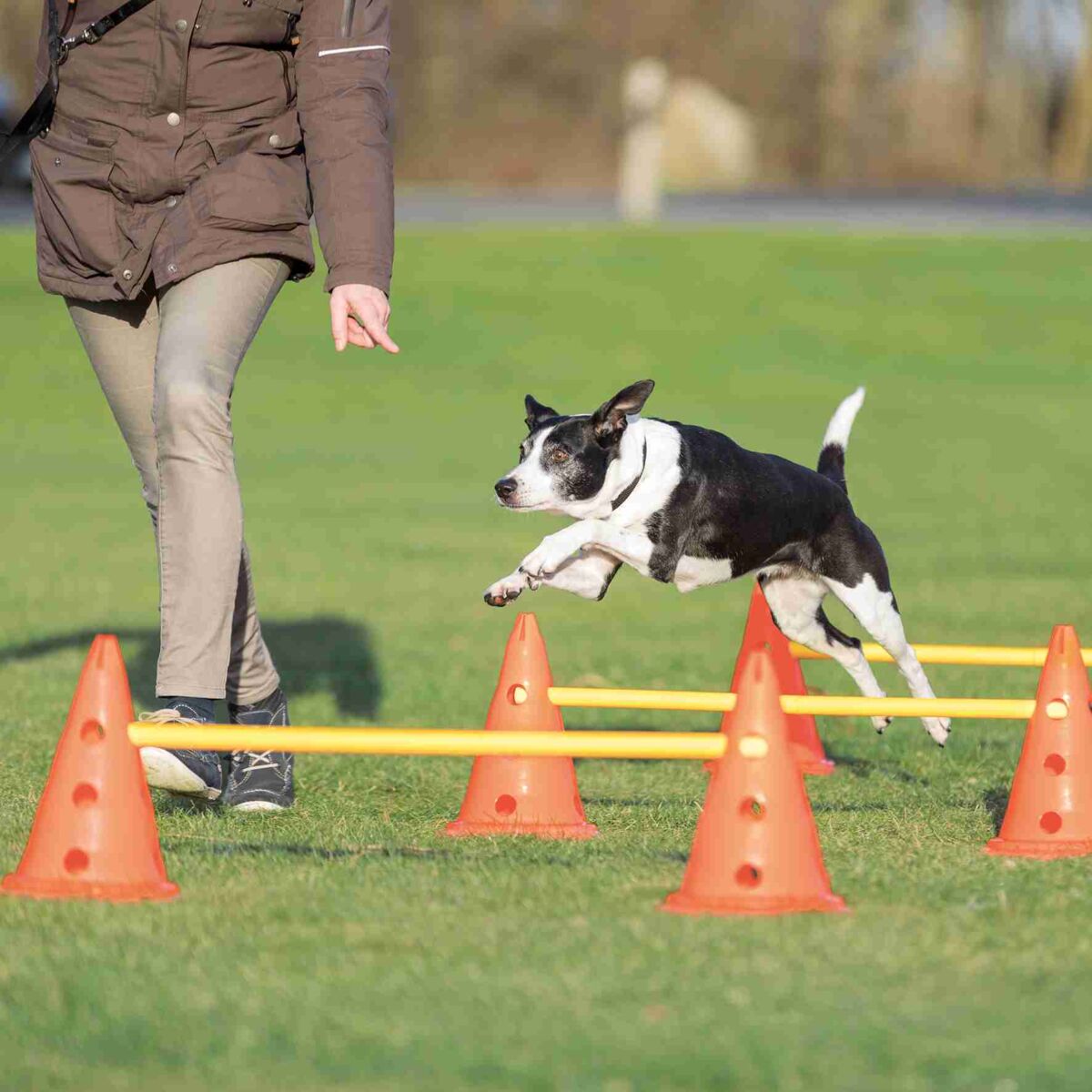
Unleash your dog's athletic potential and have endless fun with the Trixie Pylon Obstacle Set! Perfect for home training, garden play, or preparing for dog sports, this versatile set allows you to create custom obstacle courses that build your dog's focus, balance, and physical conditioning. Available in two convenient sizes, it's ideal for dogs of all shapes and sizes.
Two Sizes Available:
- Lower Height Set: Features 6 Pylons and 3 Poles (each cone measuring ø 23cm x 30cm, pole length 78cm). Ideal for smaller dogs, puppies, or limited spaces.
- Larger Height Set: Includes 4 Pylons and 2 Poles (each cone measuring ø 30cm x 50cm, pole length 100cm). Perfect for larger breeds or more challenging setups.
Key Features & Benefits:
- Versatile Training: Ideal for building agility, coordination, body awareness, and strengthening core muscles.
- Adjustable Heights: The pylons allow you to easily adjust the height of the poles, making it suitable for varying skill levels and progressive training.
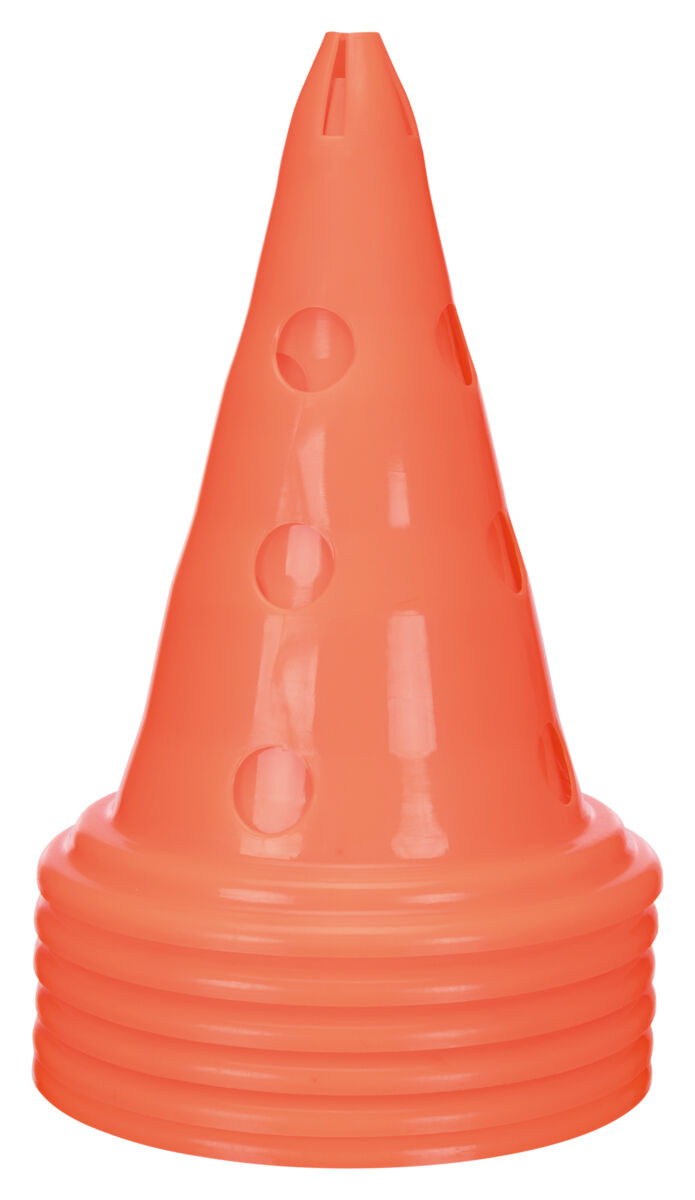
- Durable & Lightweight: Made from robust, yet easy-to-handle plastic, designed for both indoor and outdoor use.
- Easy to Set Up & Store: Simple to assemble and disassemble, making it convenient to use and pack away.
- Satisfies Natural Instincts: Provides an excellent outlet for your dog's energy and desire to learn and work.
- Boosts Confidence: Successfully navigating obstacles builds your dog's self-assurance and strengthens your bond.
Transform your garden into an agility arena and enjoy quality training time with your canine companion!
Frequently Asked Questions (FAQs): Dog Sports, Fitness & Canine Conditioning
General Dog Fitness & Exercise:
Q: Why is canine fitness important?
A: Just like humans, regular exercise and fitness are crucial for dogs. It helps maintain a healthy weight, strengthens muscles and joints, improves cardiovascular health, reduces boredom and destructive behaviours, and enhances their overall quality of life and longevity.
Q: How much exercise does my dog need?
A: This varies significantly by breed, age, and individual health. High-energy breeds (e.g., Border Collies, Labradors) need more than low-energy breeds (e.g., Bulldogs). Puppies and senior dogs have different needs. Always consult your vet to determine the appropriate amount and type of exercise for your specific dog.
Q: What are the benefits of dog sports?
A: Dog sports like agility, flyball, obedience, and rally provide physical exercise, mental stimulation, build confidence, improve communication between dog and owner, and are a fantastic way to strengthen your bond.
Using Cavalettis (e.g., Trixie Pylon Obstacle Set):
Q: What are cavalettis and how do they benefit my dog?
A: Cavalettis are a series of poles raised slightly off the ground, which dogs walk or trot over. They are excellent for canine conditioning as they encourage dogs to lift their paws higher, engage their core muscles, improve balance, coordination, and proprioception (awareness of their body in space). They are a low-impact way to build strength and flexibility.
Q: How do I set up cavalettis for my dog?
A: Start by placing the poles directly on the ground. Once your dog is comfortable walking over them, use the pylons to raise them a few inches. The spacing between poles should allow your dog to take one comfortable stride between them (roughly shoulder to hip length).
Q: What are the general guidelines for using cavalettis with my dog?
A:
- Start Slow: Begin with poles on the ground, then gradually raise them to a low height.
- Short Sessions: Keep initial sessions short (5-10 minutes) to avoid fatigue.
- Proper Spacing: Ensure poles are spaced appropriately for your dog's stride to prevent tripping.
- Positive Reinforcement: Use treats and praise to make it a fun, rewarding experience.
- Supervision: Always supervise your dog during exercise.
- Warm-up & Cool-down: Always do a short warm-up (e.g., a brisk walk) before and a cool-down after.
- Consult Your Vet: Especially if your dog has any pre-existing health conditions or injuries.
Q: Can puppies or senior dogs use this obstacle set?
A: Yes, but with extreme caution and modifications. For puppies, keep the poles on the ground or at very low heights and use soft ground. Focus on body awareness and gentle movement, not speed or jumping. For senior dogs, ensure poles are very low to the ground and movements are slow and controlled to avoid strain on joints. Always prioritise their comfort and consult your vet.
Q: What other exercises can I do with this set?
A: Beyond walking over poles, you can use the pylons to create weave poles, set up a simple jump (at very low heights, especially for beginners), or use them as markers for drills involving turns and changes of direction.
The ideal distance between cavaletti poles for your dog is crucial for effective and safe canine conditioning. It's not a one-size-fits-all measurement and depends on your dog's individual size, stride, and the specific exercise goal.
Here's a breakdown of common guidelines and how to determine the right spacing:
General Guidelines for Initial Spacing (for Trotting):
The most common starting point for cavaletti spacing for a dog's trot is based on its height:
- Height at Withers: A widely recommended starting point is to set the poles apart by a distance equal to your dog's height at the withers (the highest point of their shoulder blades, at the base of the neck, to the ground). Example: If your dog is 18 inches tall at the withers, start with the poles 18 inches apart.
- Twice Elbow Height (for short-legged breeds): For dogs with shorter legs (like Corgis or Dachshunds), you can also use twice their elbow height (distance from the elbow joint to the ground). This helps accommodate their shorter stride. Example: If your Corgi's elbow height is 6 inches, start with the poles 12 inches (2 x 6) apart.
General Guides by Dog Size (Approximate):
- Small dogs: Approximately 15-20 cm (6-8 inches) apart.
- Medium dogs: Approximately 20-30 cm (8-12 inches) apart.
- Large dogs: Approximately 30-40 cm (12-16 inches) apart.
Important Considerations and Adjustments:
Observe Your Dog's Stride: The ultimate goal is for your dog's feet to land approximately midway between two poles when they are trotting through the setup naturally.
If your dog is hitting the poles: The distance might be too far apart, or too close. Watch closely to see if they are stumbling or trying to hop over them.
If your dog is jumping or skipping: The poles might be too close, or the height might be too high for a trotting exercise.
Adjust by 1 inch at a time: Make small adjustments (e.g., 1 inch at a time) to the spacing until your dog can move smoothly and consistently over the poles.
Starting Height:
Always begin with the poles on the ground. Once your dog is comfortable, you can gradually raise them.
The poles should never be higher than your dog's hock (ankle) height for typical cavaletti exercises. Raising them higher can encourage hopping or skipping rather than the desired controlled trot and limb flexion. For general conditioning, some sources suggest starting at around "wrist height" or 1 inch off the ground.
Gait: Cavaletti exercises are primarily designed for improving the trotting gait, where diagonal opposing limbs move together. Guide your dog at a slow, controlled trot.
Consistency: Once you find the correct spacing for your dog, mark your poles or use a consistent measuring tool (like a leash with marks) so you can easily replicate the setup. If you have multiple dogs, you'll need different spacing for each.
Warm-up and Cool-down: Always conduct a short warm-up (e.g., a brisk walk) before starting cavaletti exercises and a cool-down afterward.
Supervision and Positive Reinforcement: Always supervise your dog. Use treats and praise to make the experience positive and rewarding.
Using Straight Lines vs. Arcs:
Straight Lines:
- Benefits: Excellent for focusing on consistent stride length, engaging core muscles in a linear fashion, and improving limb extension and flexion in a straightforward pattern. Easier for beginners and for owners who are new to cavaletti work.
- Usage: Best for initial training and building foundational strength and coordination. Maintain consistent spacing between all poles.
Arcs (Curved Lines):
- Benefits: Introduces an added layer of challenge that significantly works lateral flexion, improves balance, engages different core muscles, and enhances proprioception for turns and curves. It helps dogs understand how to bend their bodies while maintaining stride rhythm.
- Usage: Once your dog is proficient and comfortable trotting over straight lines of cavalettis, you can begin to introduce arcs. The poles will naturally be closer together on the inside of the arc and further apart on the outside. Guide your dog along the centre of the arc. This is great for preparing dogs for agility turns or simply building more complex body awareness.
Consult a Professional: If your dog has any pre-existing orthopaedic or neurological conditions, or if you are unsure about the setup, consult with a veterinarian, a certified canine rehabilitation therapist, or a professional dog fitness coach. They can provide tailored advice and ensure the exercises are appropriate and safe for your specific dog.
Order your Trixie Pylon Obstacle Set today and embark on a rewarding journey of fitness and fun with your dog!
Have a question?
Trixie | Dog Sports Fitness, Training & Canine Conditioning Cavaletti Set | Pylon Agility Jump Obstacles with Cones & Poles

Secure Payment

International Delivery

Pet care advice

Need More Information?
- Choosing a selection results in a full page refresh.